Hurricane Fiona's Effects on Plantain and Banana Plantations and Farmer's Adaptation and Recovery strategies in Puerto Rico
2,3
1,2,3
Paloma S. Rodríguez Serrano , Kathleen McGinley , Nora L. Álvarez-Berríos, William A. Gould
Environmental Science Department, University of Puerto Rico Río Piedras
USDA Forest Service, International Institute of Tropical Forestry, 1201 Calle Ceiba Jardín Botánico Sur, Río Piedras, 00926, PR, United States
USDA Climate Hubs, International Institute of Tropical Forestry, 1201 Calle Ceiba Jardín Botánico Sur, Río Piedras, 00926, PR, United States
2
2,3
1
2
3
Puerto Rico’s location in the Atlantic Hurricane belt makes it susceptible to disturbances such as hurricanes and storms, which can have detrimental effects on its social-ecological-technological systems (McGinley et al., 2022). This includes threats to food security, home safety, human health, well-being, and local economies. Inconsistent and ineffective maintenance and mitigation of public infrastructure and systems and their exposure to climate extremes have resulted in long and frequent interruptions of essential services and daily activities in Puerto Rico (Taylor et al., 2012). Due to climate change effects, hurricane and tropical storm frequency and severity are expected to intensify with time (Bhatia et al., 2019), underscoring the need for effective mitigation and adaptation practices and strategies throughout the region.
Hurricane Fiona passed over Puerto Rico on September 18, 2022 as a category one hurricane based on the Simpson-Saffir scale, destroying 90% of commercial crops in Puerto Rico (Pasch et al., 2023). Agricultural lands' vulnerability to hurricane disturbances and associated strategies to mitigate impacts remain understudied, particularly in the tropics (Wiener et al., 2020). To fill this gap, we assessed the effects of Hurricane Fiona in plantain and banana plantations in Puerto Rico and the associated challenges faced by farmers. We also examined the effectiveness of adaptation and mitigation strategies used in farm systems for plantain and banana plantations. Results obtained in this study shed light on hurricane vulnerabilities in the agricultural sectors and means to mitigate the risks of future events toward more resillient communities.
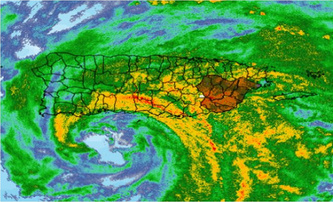
Figure 1. Doppler radar Photograph of Hurricane Fiona over Puerto Rico (Image by National Weather Service, 2022).
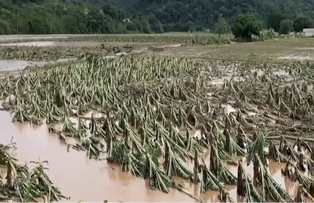
Figure 2. Plantain plantations in Yauco flooded after Hurricane Fiona (Photo by Telemundo, 2022).
Methodology
A survey instrument and semistructured interview guide were created to answer the three main questions of this investigation: (1) what were the social-ecological effects and challenges of hurricane Fiona on plantain and banana plantations according to reports by extension agents and advisors? (2) what mitigation strategies were used to reduce risks?, and (3) what was the perception of the effectiveness of the strategies for plantain and banana plantations? The survey instrument included Likert-scale and open-ended questions. It was administered to public-sector land and agricultural management advisors from different federal goverment agencies, extension and non-profit organizations. Seven of the fifteen surveyed participants were also interviewed to explore hurricane hazards and mitigation strategies based on their expertise, experiences, and availability. The survey participants were recruited using a snowball sampling design, starting with two key informants from public sector agencies who provide advisory services and assistance.
Participants surveyed and interviewed
Participants surveyed
Results
Monetary Losses for plantain and banana plantations
Hurricane Fiona’s total losses in the agricultural sector were $150 million; 74% of which were from plantain and banana crops (Office of Agricultural Statistics, 2023). In contrast, hurricane María, which was a category four hurricane when it passed through Puerto Rico in September 2017, resulted in total losses of $59 million for plantain and banana (Office of Agricultural Statistics, 2018), 53% less than hurricane Fiona’s, indicating a significant difference in total losses associated with these two events. Most of the losses associated with hurricane Fiona were centered in the west-central and south regions.
$20 millions
$15 millions
$10 millions
$5 millions
Agricultural Region
Figure 3. Monetary losses associated with hurricanes Fiona vs. María based by agricultural regions as documented in the SEPA preliminary report administered by the Department of Agriculture of Puerto Rico Office of Agricultural Statistics ( 2023). p-values= <0.05, two-tailed t-test= 0.9 and df=11
$12 millions
$10 millions
$10 millions
$8 millions
$6 millions
$4 millions
$2 millions
Agricultural Region
Figure 4. Monetary losses associated with hurricanes Fiona vs. María based by agricultural regions as documented in the SEPA preliminary report administered by the Department of Agriculture of Puerto Rico Office of Agricultural Statistics ( 2023). p-values= <0.05, two-tailed t-test= 0.9 and df=11
Associated impacts for plantain and banana
The main/primary impacts attributed to hurricane Fiona reported by research respondents were flooding from river growth (Mean= 4.80, SD= 0.56), flooding from rain (Mean=4.53, SD= 0.74) strong winds (Mean=4.20, SD=0.77) which were considered to have high to devastating impacts.
Figure 5. Analyses of differences in hurricane effects on banana and plantain plantations
Mitigation/Recovery Strategies for plantain and banana
The main strategies used by farmers, according to advisors, were subscription to agricultural insurance programs (Mean=3.50, SD=0.70), power generator acquisition (Mean=3.45, SD=0.50), and harvest once economic maturity is reached (Mean=3.00, SD=0.74). Respondents indicated that approcimately 50% of the farmers used this strategies.
Figure 6. Mitigation strategies for hurricane preparedness in the short term used by farmers.
Interviews
During interviews, participants indicated that the most common effects from hurricane were associated with water flow through farms that left large sediment deposits (frequency=2) and led to landslides (f=4). In studies associated with earlier storms, farmers reported a lack of emergency plans, information, and materials to help or guide them in their recovery process following these events (Álvarez-Berríos et al., 2021; McGinley et al., 2022). Farmers' preparedness and recovery processes following Fiona were more effective than those for previous events (f=7), showing an improvement towards hurricane preparedness. Participants stated (f=5) that to continue the development of more resilient plantations towards hurricanes, it is important to encourage and educate farmers towards practices that conserve the resources available to maximize crop production and ecosystem resources.
References
- Álvarez-Berríos, P. N. L., Wiener, M., S. S., McGinley, P. K. A., Lindsey, P. A. B., & Gould, P. W. A. (2021). Hurricane effects, mitigation, and preparedness in the Caribbean: Perspectives on high importance–low prevalence practices from agricultural advisors. Journal of Emergency Management, 19(8), 135–155. https://doi.org/10.5055/jem.0585
- Bhatia, K. T., Vecchi, G. A., Knutson, T. R., Murakami, H., Kossin, J., Dixon, K. W., & Whitlock, C. E. (2019). Recent increases in tropical cyclone intensification rates. Nature Communications, 10(1). https://doi.org/10.1038/s41467-019-08471-z
- McGinley, K. A., Gould, W. A., Álvarez-Berríos, N. L., Holupchinski, E., & Díaz- Camacho, T. (2022). READY OR NOT? Hurricane preparedness, response, and recovery of farms, forests, and rural communities in the U.S. Caribbean. International Journal of Disaster Risk Reduction, 82, 103346. https://doi.org/10.1016/j.ijdrr.2022.103346
- Oficina de Estadísticas Agrícolas (2023) SEPA Report.
- Pasch, R. J., Reinhart, B. J., & Alaka, L. (2023). Fiona as a Category 4 Hurricane at 2100 UTC 21 September. Image Courtesy of NOAA/NESDIS/STAR.
- Taylor, M. A., Stephenson, T. S., Chen, A. A., & Stephenson, K. A. (2012). Climate Change and the Caribbean: Review and Response. Climate Change and the Caribbean: Review and Response Caribbean Studies, 40(2), 169–200. http://www.redalyc.org/articulo.oa?id=39226915007
- Wiener, S. S., Álvarez-Berríos, N. L., & Lindsey, A. B. (2020). Opportunities and challenges for hurricane resilience on agricultural and forest land in the U.S. Southeast and Caribbean. Sustainability (Switzerland), 12(4). https://doi.org/10.3390/su12041364